Korean Army Stew (Budae Jjigae)
Only the best will stew
What is Korean Army Stew?
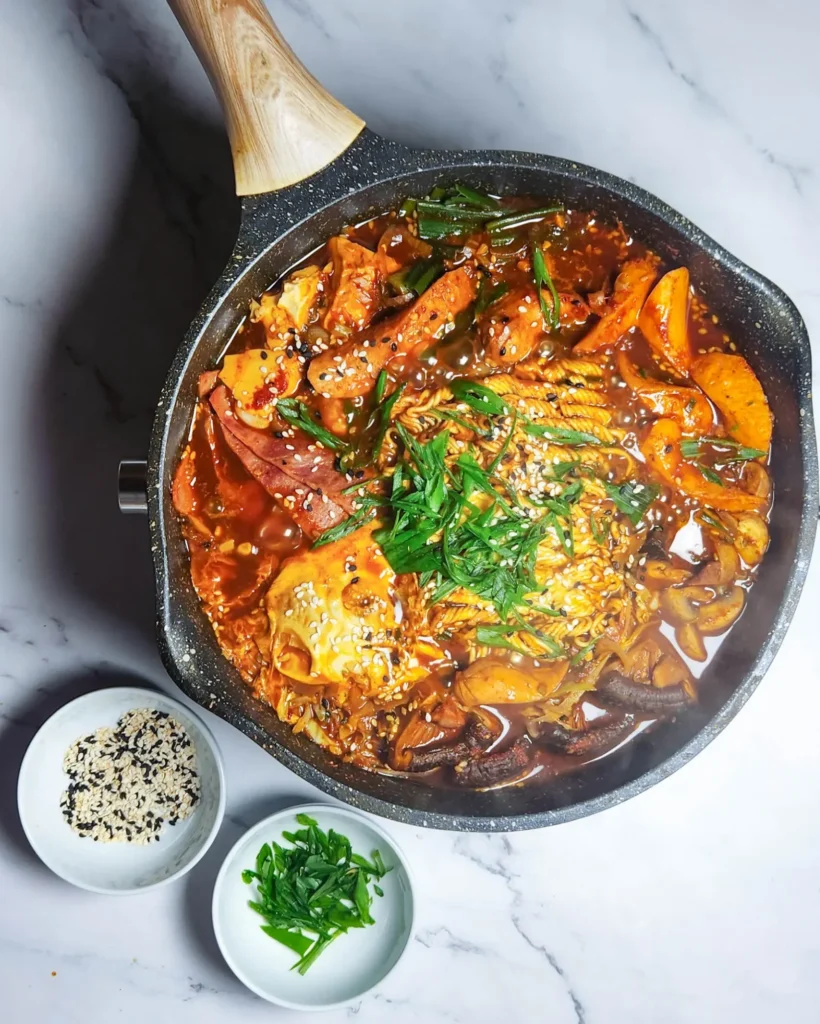
Korean Army Stew (Budae Jjigae) is a bold, spicy, and ultra-comforting hotpot that brings together instant ramen, kimchi, and a mix of East-meets-West ingredients like spam, sausages, and melted cheese. Born from post-war ingenuity, this flavour-packed stew is the ultimate fusion of savoury, spicy, and umami. It’s perfect for sharing and guaranteed to warm you up with every spoonful!
You’ll love it if…
…you’re looking for a soul-warming, flavour-loaded dish that combines the best of Korean spice with rich, hearty Western ingredients.


Why is the canned luncheon meat SPAM called SPAM? There is a pervasive myth that it stands for Scientifically Processed Animal Matter, as well as shoulder of pork and ham and also SPiced hAM.
Anyway why am I talking about canned meat in context of this Korean Army Stew? It’s because SPAM is integral to this hot pot recipe. After the Korean War, food was scarce and locals used American military rations such as hot dogs, sausages, and SPAM as ingredients, combined with Korean local ingredients to create this wonderful mixed hot pot.
The best thing about this stew is it’s customisable with anything you have on hand.
Not a SPAM fan? Don’t worry ma’am, you can just use ham.


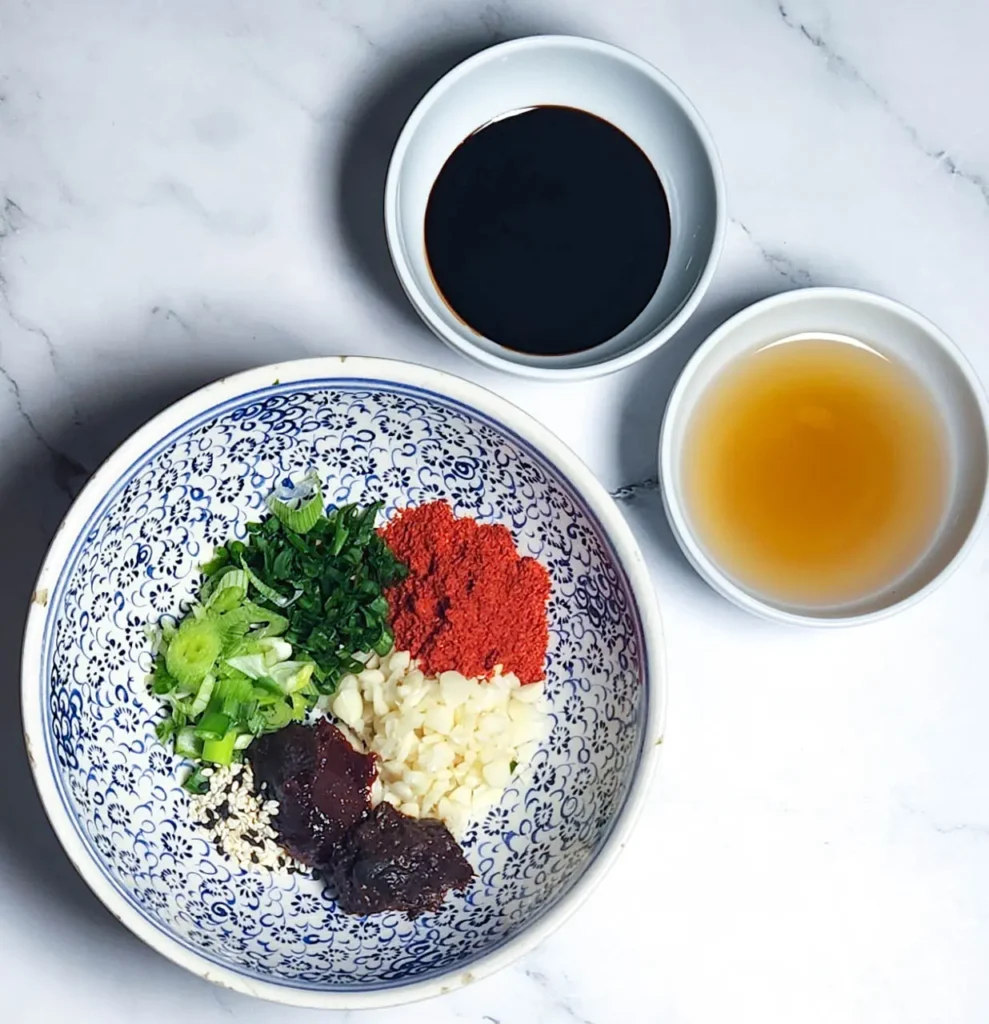
Gather the Ingredients and Make the Stew Base
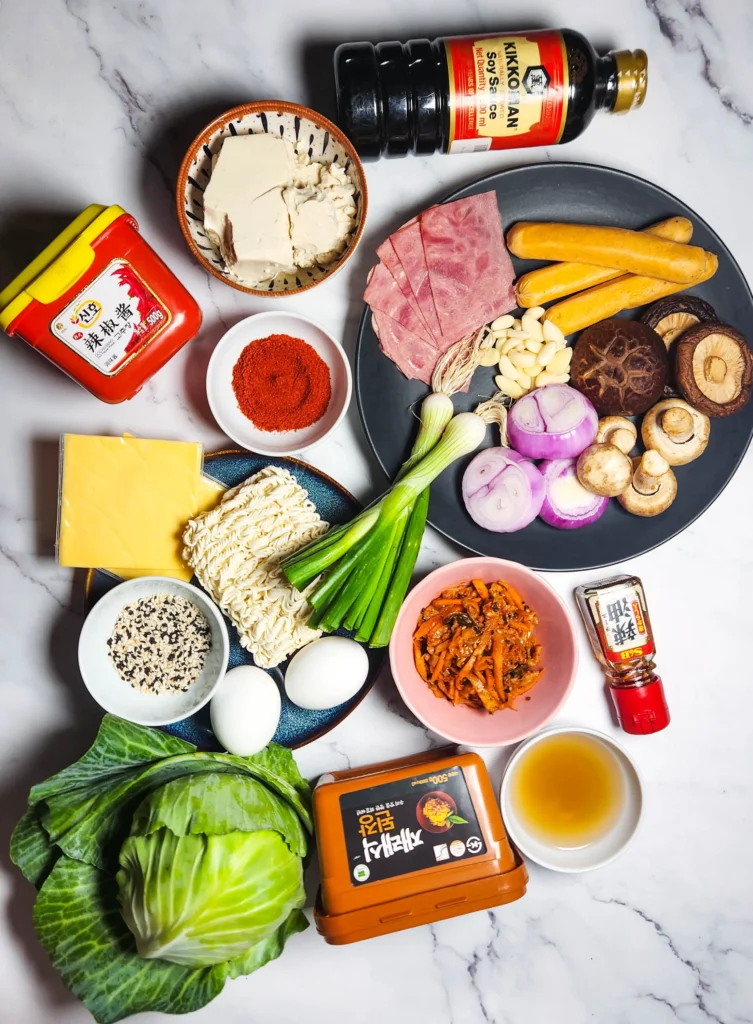
Mix all the stew base ingredients into a paste.

Assemble and Cook The Stew
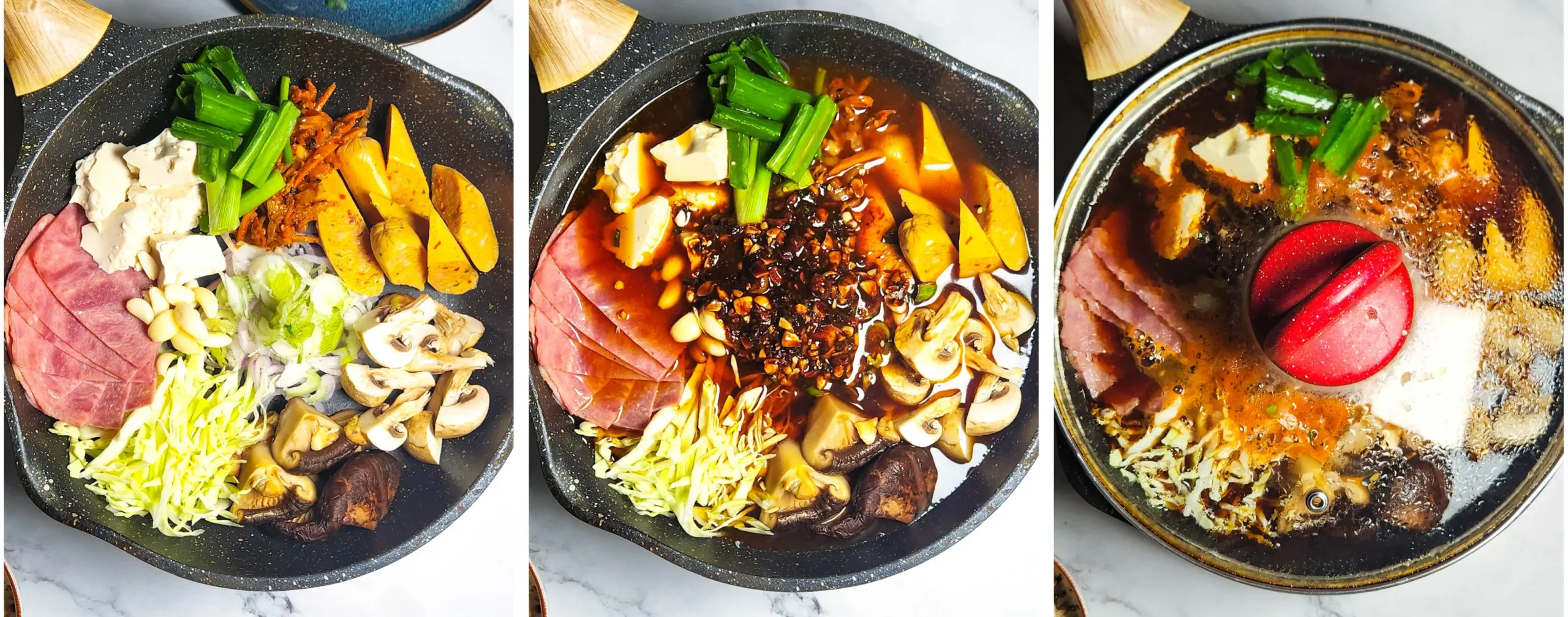
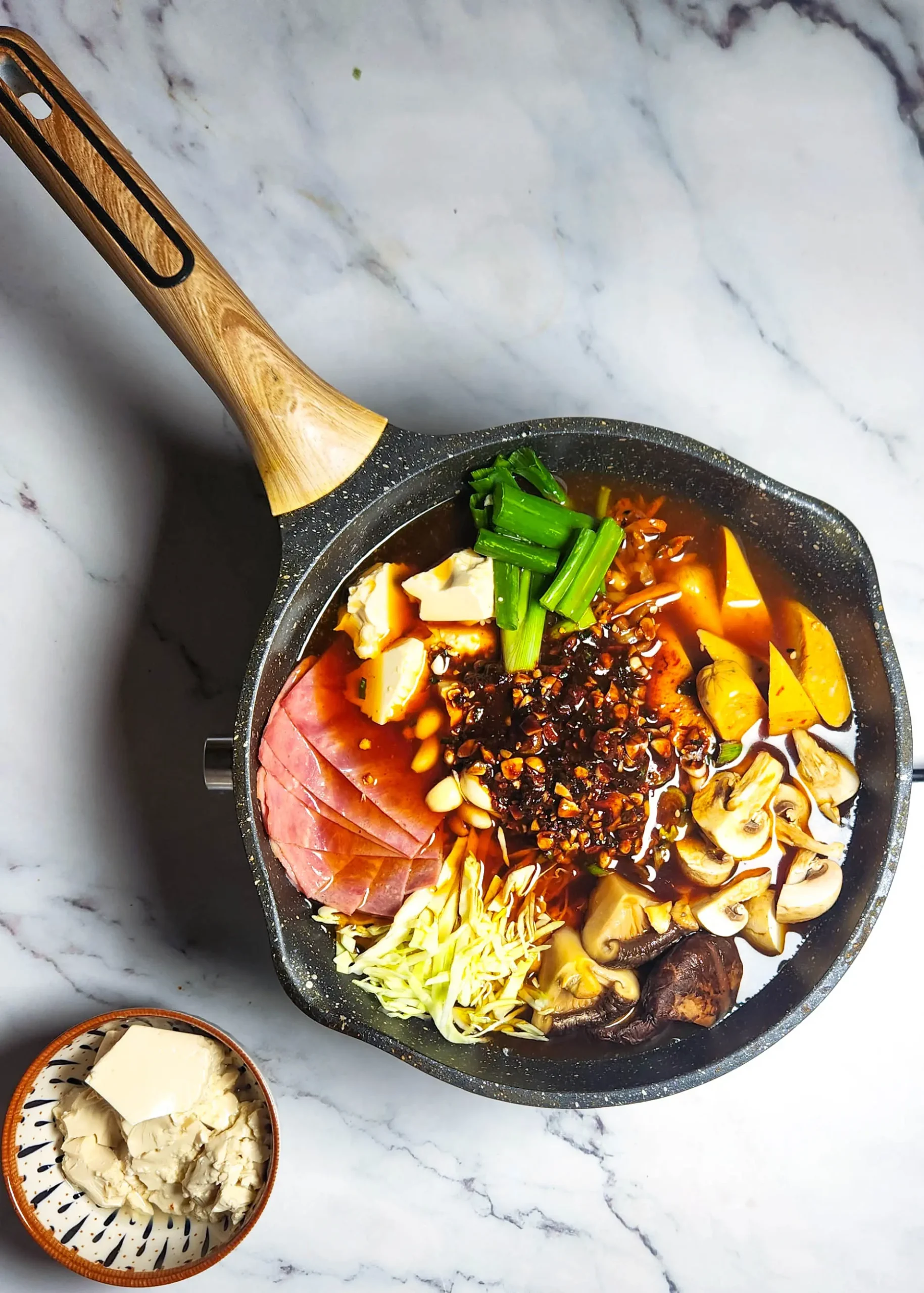
n a wide pot, arrange the vegetables, kimchi, meats, and tofu. Pour the stew base over the ingredients, followed by the stock. Cover and bring to a boil over medium heat.
Once boiling, stir the stew and place the instant noodles on top. Cover and cook for 2 minutes. Remove the lid, add cheese slices and crack in the eggs. Lower the heat, cover, and simmer for 5 more minutes.

Final Touches and Serving
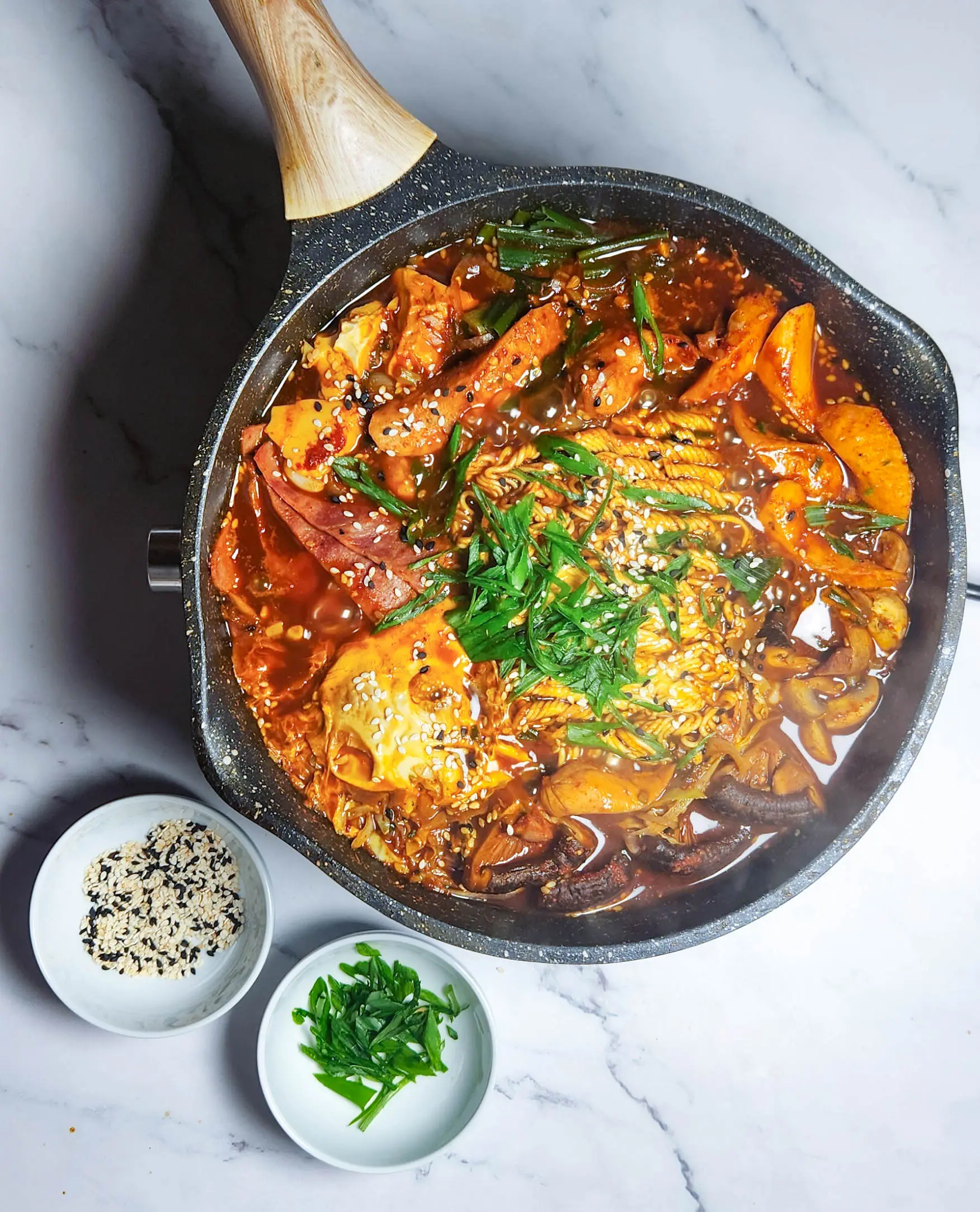
Stir everything together and serve directly from the pot for a traditional army-style experience, or portion into bowls. Enjoy hot!

- Layer the flavours – Start by sautéing garlic and gochujang in a bit of oil before adding broth. It wakes up the spices and gives the stew a deeper, richer taste.
- Use a mix of broths – A combo of chicken stock and dashi (or even a splash of anchovy broth) gives the stew that extra umami kick.
- Add the noodles last – Don’t throw in the noodles too early, or they’ll turn to mush. Let them cook in the bubbling broth right before serving for that perfect chewy bite.
Korean Army Stew (Budae Jjigae)
Ingredients
Equipment
Method
- Combine all the stew base ingredients.
- In a wide bottomed pan or pot arrange all the vegetables, kimchi, meats and tofu. Do not add the instant noodles, cheese and eggs just yet.
- Add the stew base mixture to the middle of the pot and add 1 litre stock on top.
- Cover the pot and turn it to medium heat.
- Once it comes to a boil, stir the ingredients and add 1 cake of instant noodles on top. Put the lid back on.
- After 2 minutes, take the lid off, and add 2 slices of cheese singles and crack 2 eggs into the stew. Turn the heat to low and cover, let it cook for a further 5 minutes.
- To serve, mix well and optionally scoop into a bowl or serve directly from the pot for a traditional army-style experience
FAQ
Absolutely! Swap it out for tofu, ham, extra mushrooms, or even thinly sliced pork belly. The stew is flexible so use what you love.
Go for Korean instant noodles like Shin Ramyun or Nongshim. They hold up well in the broth and soak up all that spicy, savoury goodness.
It depends on how much gochujang and gochugaru you use. If you want it milder, start with less and add more to taste.
Yes! You can prep all the ingredients and store them separately. But cook the stew fresh – the noodles and instant toppings get soggy if left too long.
You can serve it with kimchi, pickled radish, or a simple cucumber salad, but its a pretty comprehensive meal on its own!